Eight strategic decisions a developer should make before the project starts
Listen to key points0:56
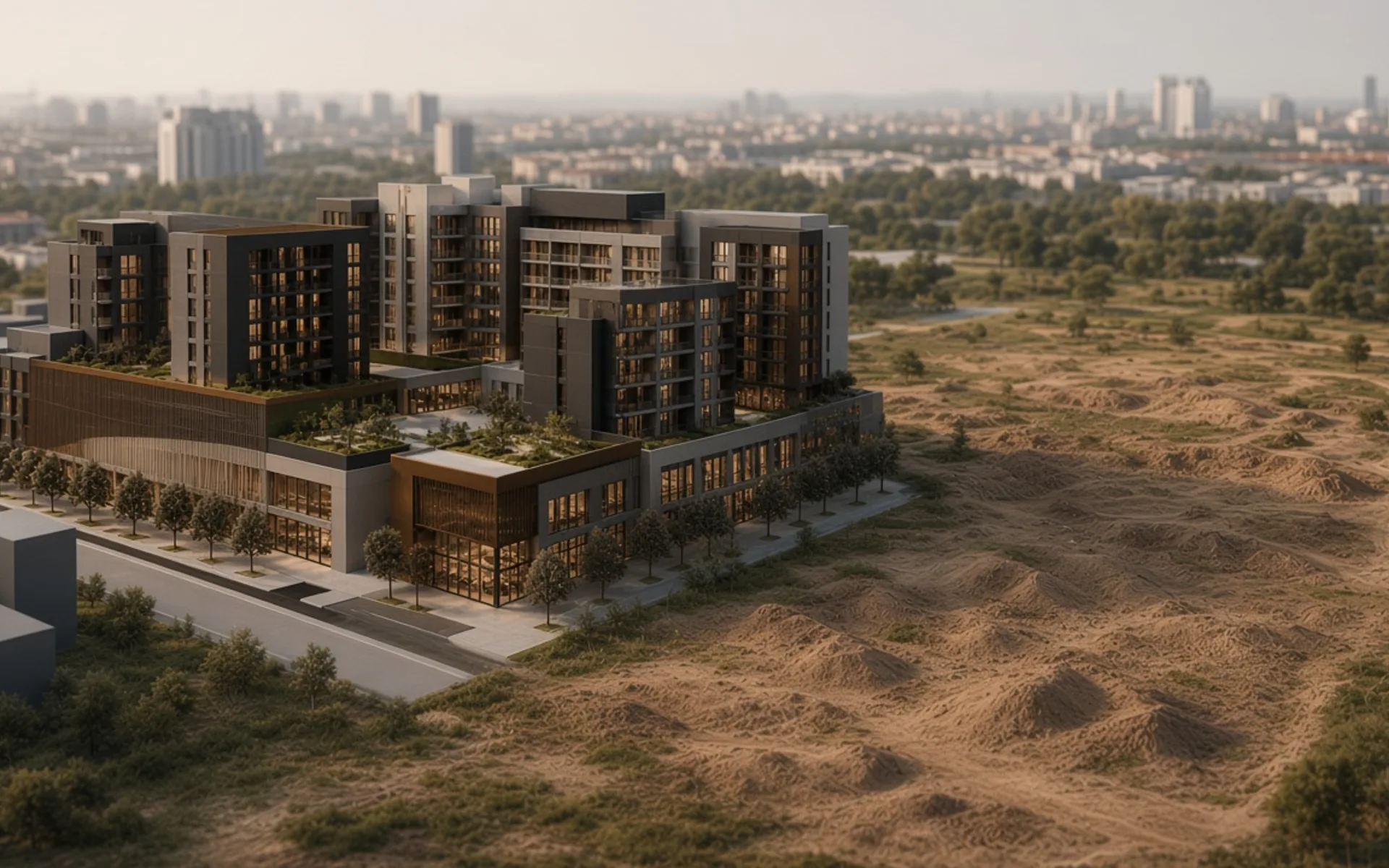
Many of the costliest mistakes in development projects arise not during construction but at the very beginning, in decisions taken before a sketch exists. When the site, target audience and product format do not fit together, even good architecture and good delivery cannot fully repair it. The eight decisions below organise the main questions to answer before a project begins.
1. The brief: what is the project for? A brief is more than an area schedule. It should state the project's purpose, product type, quality level and success criteria. A weak brief leads to late changes, redesign and different expectations inside the team.
A good brief usually includes:
- the primary objective (sale, lease, long-term hold, hybrid model);
- the target quality and level of differentiation;
- the non-negotiable constraints (budget, timeline, technical conditions);
- the decision-making rule: who approves what, and when.
2. Target audience A product “for everyone” often fits no one completely. The profile of the buyer or tenant — household structure, daily habits, ability to pay, expectations of space — directly influences layout and service decisions. This should be supported by observation of the local market and appropriate research, not intuition alone.
3. Feasibility A feasibility study tests whether the idea works within real parameters: land cost, construction cost, sales or rental assumptions, financing structure and timeline. The important element is sensitivity analysis. When key assumptions shift — costs rise or sales slow — does the project remain resilient?
It is advisable to treat feasibility as a tool that is updated throughout the project rather than a one-off report. Architectural decisions such as area efficiency, number of floors and facade complexity should stay linked to it.
4. Planning and regulatory constraints Zoning, density, height, setbacks, parking and infrastructure requirements define the real potential of the site. These conditions depend on local rules and decisions by competent authorities, and they can change, so they should be verified professionally in advance.
A recommended approach:
- clarify the legal and technical conditions of the site at the earliest stage;
- include the realistic duration of the permitting process in the budget and programme;
- prepare alternative scenarios for uncertain conditions.
5. Phasing On larger projects, building everything at once is not always optimal. Phasing spreads the financial load, allows adjustment based on market response and can show revenue earlier. At the same time, each phase must work independently, including access, infrastructure, landscape and operation, and the impact of construction works on occupied or used parts must be considered.
From the architect's perspective, phasing means protecting a unified identity and quality: visual and functional coherence between the first phase and later ones must not break.
6. Budget structure A budget is not only construction cost. Design fees, permits, infrastructure, marketing, financing, contingency and operational readiness all need to be included. Contingency should be set in proportion to project risk and managed under clear rules.
Practical questions:
- which cost items are fixed and which are variable?
- how will quality be protected if the budget has to shrink?
- is there a plan for risks such as price escalation or material shortages?
- who makes value engineering decisions, and on what criteria?
Reducing cost does not always mean reducing value, but it should be determined in advance which decisions would damage the product's core differentiator.
7. Operational model How the project will be managed after completion affects design decisions. A residential building for sale, an office for lease and a hotel concept each require different services, technical provisions and maintenance. If management of common areas, cleaning, security, energy and service costs are not considered at design stage, they can later become a burden for both residents and investors.
Early consultation with a facility management company and a preliminary forecast of operating costs are useful here.
8. Architectural positioning How a product is recognised in the market is shaped by architectural language, planning quality, public areas and fine detail. Positioning does not mean expensive materials; it means a consistent, purposeful approach suited to the local context. Beyond the marketing visual, architecture creates a real difference in value through comfort of living, daylight, accessibility and long-term acceptance.
Positioning should be aligned with the brief and the target audience: a project that promises luxury but delivers standard solutions can lose credibility.