A sustainable building is more than a “green facade”: energy, materials and longevity
Listen to key points0:56
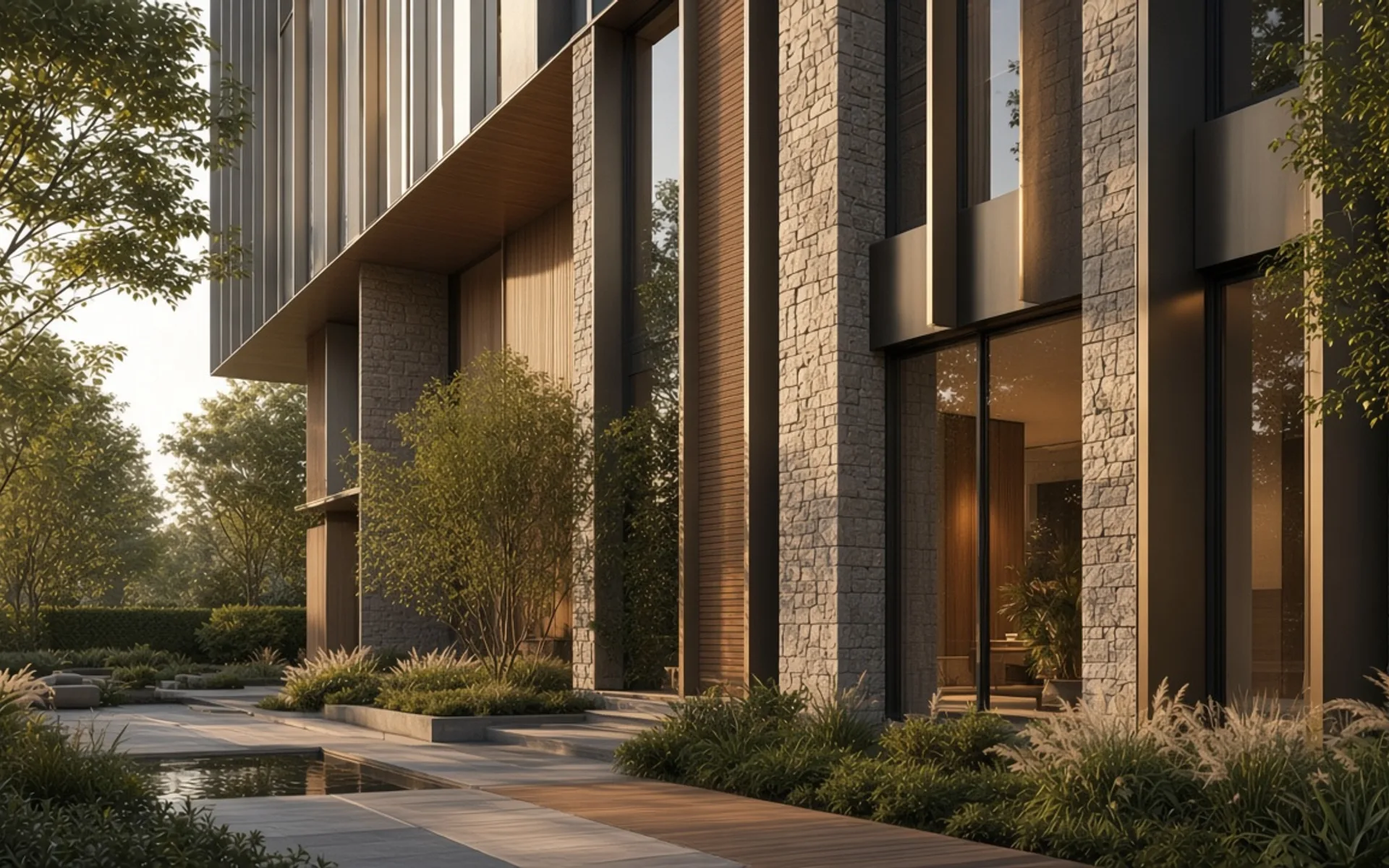
The phrase “sustainable building” is sometimes tied to a visual picture: plants on a facade, shades of green, an image of a solar panel. But real sustainability depends on how carefully energy, material, water and maintenance decisions are made across the whole life of the building. A planted facade can be a good element, but if the rest of the building is inefficient, ages quickly and is expensive to maintain, the overall result cannot be called sustainable.
The greenwashing risk Greenwashing means making environmental claims that have no real effect or cannot be substantiated. In architecture and real estate it often looks like this: words such as “eco”, “green” or “zero impact” used without precise data, or a single element presented as an indicator of the whole project.
There are simple principles to guard against it:
- a claim should be specific and verifiable (what is measured, by what method, against what baseline);
- project decisions should be assessed over the lifetime, not only by how the building looks on handover day;
- limitations and trade-offs should be stated openly.
Passive strategies first The most reliable sustainability decisions are often the simplest and the earliest. Passive strategies make the building itself respond to the climate before mechanical systems are added:
- **Orientation and massing.** Placing the building in relation to sun and wind significantly changes heat load and daylight.
- **Shading.** Well-designed solar shading in front of windows helps reduce summer overheating. In hot, sunny summer conditions such as those in Azerbaijan, this is particularly relevant.
- **Natural ventilation.** Where possible, cross-ventilation and well-planned openings can reduce the mechanical cooling load.
- **Thermal mass and insulation.** The quality of the envelope, including insulation, air tightness and management of thermal bridges, shapes a major part of operational energy.
- **Daylight.** Good daylight reduces electric lighting load and improves user comfort, but excessive glazing can create problems.
Unlike technologies added later, passive decisions usually create no additional operating cost and work for a long time. Active systems, such as HVAC and renewable energy, should be built on top of them.
Durable materials It is hard to find the “greenest” material, because every material has a different impact in production, transport, use and end of life. A practical approach looks at these factors:
- **Longevity.** A material that must be replaced often creates both cost and resource burden over the long term.
- **Local availability.** Local or regional materials can reduce transport impact and supply risk, but quality and climatic suitability must be verified too.
- **Repairability and replaceability.** A material or construction that can be repaired in parts is more flexible than one that must be replaced entirely.
- **Ageing character.** A material that ages well does not lose value over time and sometimes gains character.
- **End of life.** If materials can be separated and reused at demolition, the project's future liability is reduced.
Claims about materials should, where possible, be supported by manufacturer documentation and data.
Water Water decisions often receive less attention than energy, yet they matter for both installation and operation. Water-efficient fittings, rainwater management, drought-tolerant planting in the landscape and reducing leak risk can all lower operating cost and environmental load. In many parts of Azerbaijan a careful approach to water resources is especially logical.
In landscape decisions, plant selection and irrigation strategy matter equally: extensive greenery that needs heavy irrigation can itself create an operating burden.
Maintenance and upkeep A sustainable building is one that can be maintained. A facade element in an inaccessible place, equipment that is complicated to replace, or undocumented systems become problems in the long run. Consider these at design stage:
- safe access for cleaning and inspecting the facade and roof;
- enough space and service access for technical equipment;
- separating components that can be renewed or replaced;
- making operating instructions and a maintenance plan part of the handover package.
For elements such as planted facades or green roofs, maintenance cost and responsibility should be clear in advance; otherwise such elements can deteriorate in operation and have the opposite effect.
Lifecycle value and decision framework Initial construction cost and lifetime cost are different things. A decision may cost somewhat more to build but prove economical over its life by reducing energy, repair and replacement cost. On the other hand, not every expensive choice is automatically sustainable.
When comparing decisions, these questions help:
- how does this decision affect operational energy and water?
- how long will the material last and how will it be maintained?
- how easy and how costly are replacement and repair?
- does this solution allow for future change of use?
- can the claimed benefit be measured or verified?
This approach matters to developers and investors too: a sustainable building can make operating cost more predictable and improve long-term market acceptance. The specific effect on price and demand depends on the market and the project, and should not be presented as a promise.