Asymmetrical balance: harmony through different elements
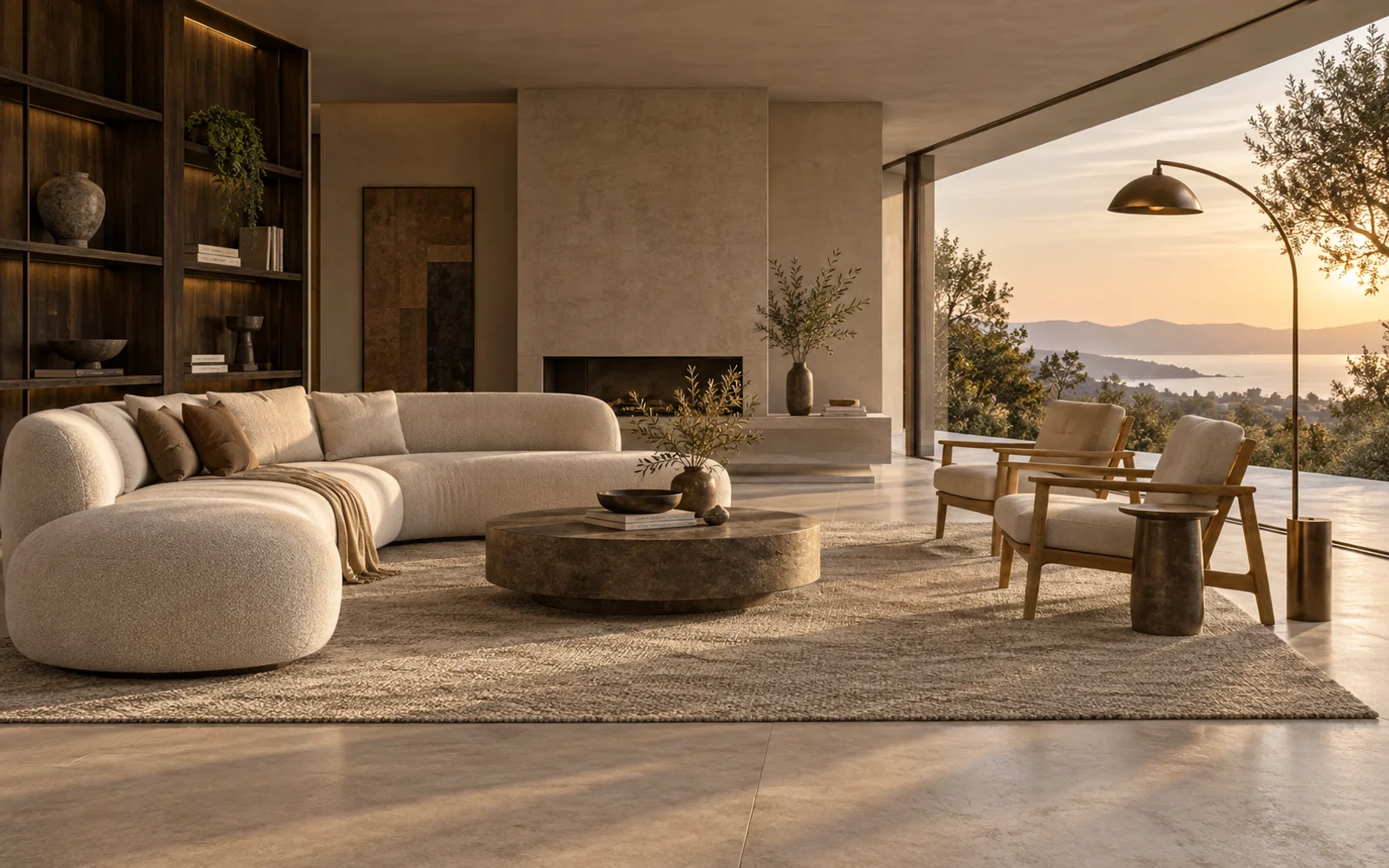
Asymmetrical balance does not require matching objects. Instead, different sizes, shapes and colours are arranged so their visual weight feels balanced. The result may look relaxed, but it is not a random collection: each element contributes to the whole.
Understand visual weight
Size matters, but dark colour, dense texture and an expressive shape can also make an object feel more prominent. A small dark chair may therefore counterbalance a larger pale piece. This is a relationship judged within the room, not a numerical formula.
Compose groups of different elements
A substantial sofa on one side and two lighter chairs with a floor lamp on the other can provide a starting point. The distance between those groups, the position of a rug and the open space around them also affect the result.
Preserve a shared connection
Repeating a material or colour family helps different objects belong together. If every piece competes through colour, shape and texture at once, the room can feel fragmented. A few shared characteristics make the composition coherent.
Test before adding more
Place the main volumes first, then introduce lighting and smaller items. If one side feels too heavy from the entrance, try moving existing objects before buying more decoration. Clear circulation and comfortable conversation distances matter as much as the visual balance.
Related reading
- Interior emphasis: the role of colour, light and texture
- Symmetrical balance in interiors: order and harmony
Editorial note
Adapted from the supplied source material. The cover is an AI-generated conceptual illustration, not a completed project or a technical drawing.
Discuss how these principles could apply to your project with Raul Architects.
Discuss your project →