Hybrid construction: designing for disassembly and reuse
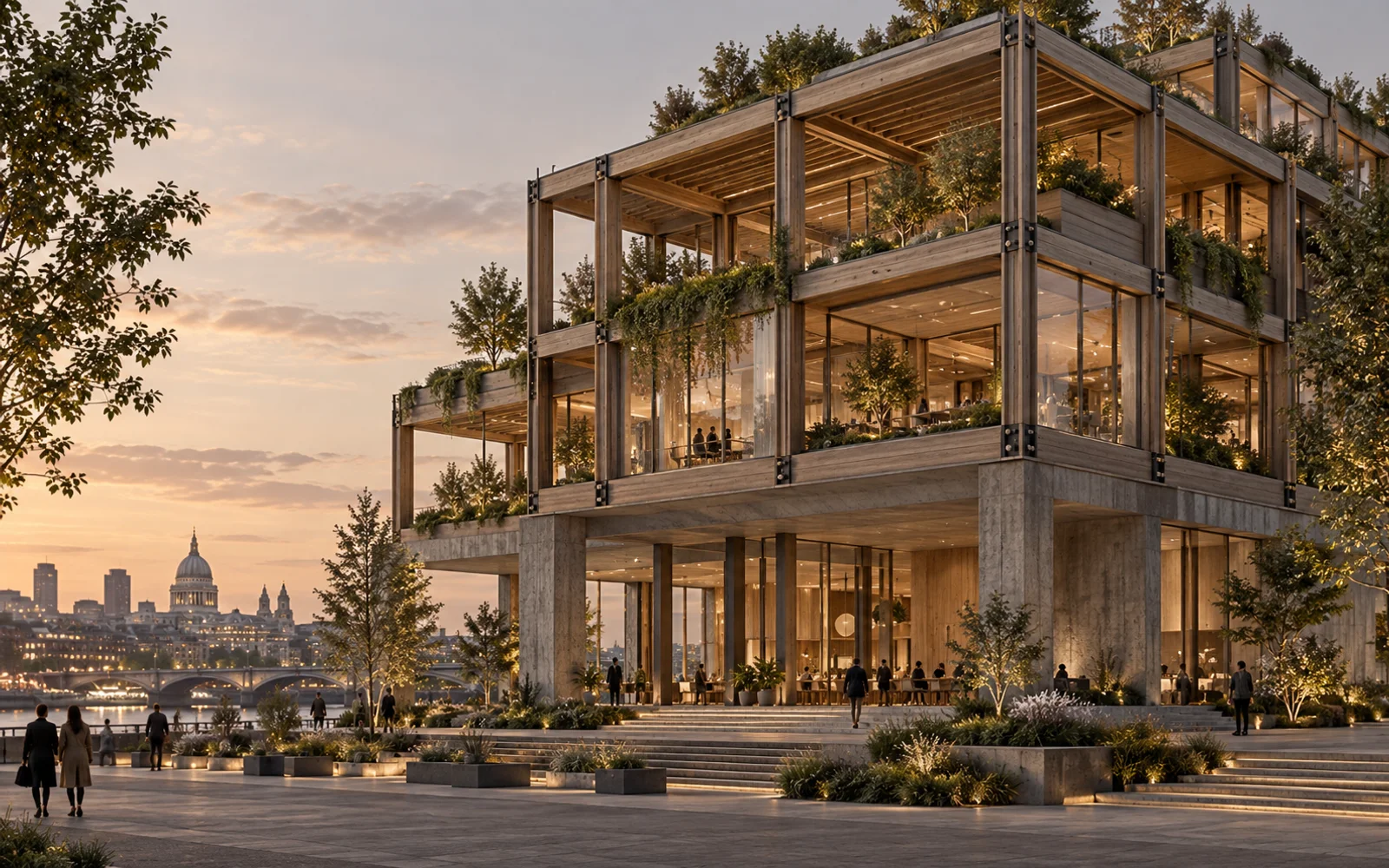
The future of hybrid construction is about more than combining additional materials. A useful question is how elements can be adapted, removed and reused when the building's purpose changes. Those possibilities begin with early design decisions.
Consider the whole lifecycle
Manufacture, transport, construction, maintenance and the eventual destination of materials belong in the assessment. The presence of timber or a reduction in concrete does not by itself prove a lower-carbon outcome. Alternatives need comparable boundaries and data quality.
Plan reversible connections
Accessible, separable connections may help elements be removed without damage. The disassembly sequence deserves attention alongside assembly. Reuse still requires assessment of the recovered element's condition and suitability for its new role.
Keep information with the element
BIM can connect information about materials, dimensions, connections and changes. A model's existence is not enough: records need updating and transfer to the team operating the building.
Test a future scenario now
If a floor layout changes, which elements stay and which can be separated? These questions turn adaptability into concrete design choices. A building prepared for the future is judged not only by its initial appearance, but also by the possibilities it leaves open for later use.
Related reading
- What is hybrid construction and how does it work?
- Fire safety in hybrid structures: a system approach
Editorial note
Adapted from the supplied source material. The cover is an AI-generated conceptual illustration, not a completed project or a technical drawing.
Discuss how these principles could apply to your project with Raul Architects.
Discuss your project →